Station
27.6648 N / 81.5158 W
Sheet 01, Florida

Hurricane season
Jun 1 to Nov 30
Updated daily

No. 01, front page

The sun state, read like weather.

A daily publication about clean and renewable energy in Florida: commission dockets and storm-hardening rulemakings, rooftop and utility-scale solar, storage and microgrids, and the coast that has to live with all of it. Every entry is dated, backed by public records, and written for the people who pay Florida power bills.

Read today’s top story
Top 3State rank for installed solar in national tallies
409 MWManatee battery, solar-charged at switch-on
150 MWSolar field behind one town’s Ian ride-through
Illustration of concentric pastel storm-eye rings over a deco coastal skyline with rooftop solar panels and a half-set sun on the horizon
Figure 01, eyewall over the coastIllustrative

No. 02 Top story


Sep 24, 2026 / By the Renewable Energy Florida editors / 6 min read

The town the hurricane could not black out.

When Hurricane Ian came ashore near Fort Myers in September 2022, more than two million Florida customers lost power. A few miles inland, the planned town of Babcock Ranch kept its lights on. The town was built from scratch around a roughly 150-megawatt solar field with battery storage, its streets engineered to flood and drain, its wires buried, its downtown shaded by solar trees.

The lesson is not that one developer built a lucky enclave. It is that resilience was treated as a design requirement, not an upgrade, and that the same toolbox, solar plus storage plus hardening, is now showing up in batteries, shelters, and grid code across the state.

Read the full story
Illustration of tilted rooftop solar panels in silhouette under banded storm clouds, catching a low slit of warm light
Figure 02, rooftop arrays under storm lightIllustrative

No. 03 Briefs


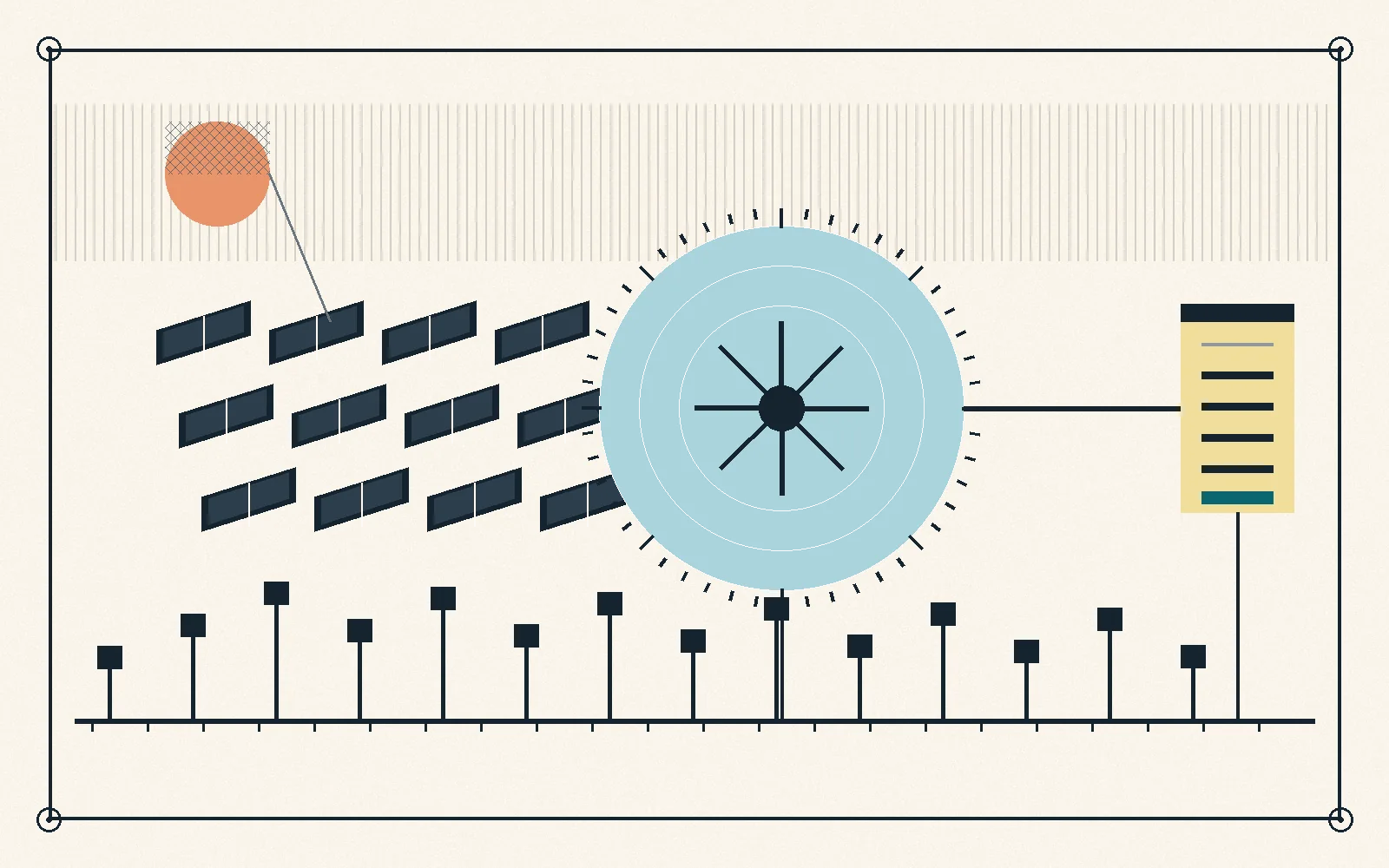
Diagram of solar panels feeding a concentric grid gauge and a battery block above a rail of building loads

Storage / Filed Sep 24

Manatee keeps its crown, for now.

Florida Power and Light’s Manatee Energy Storage Center in Parrish still anchors the state’s storage map: 409 megawatts and about 900 megawatt-hours, charged from an adjacent solar field and, at its December 2021 switch-on, the largest battery of its kind anywhere. Rivals are now sizing up behind it.

What storage did during Ian
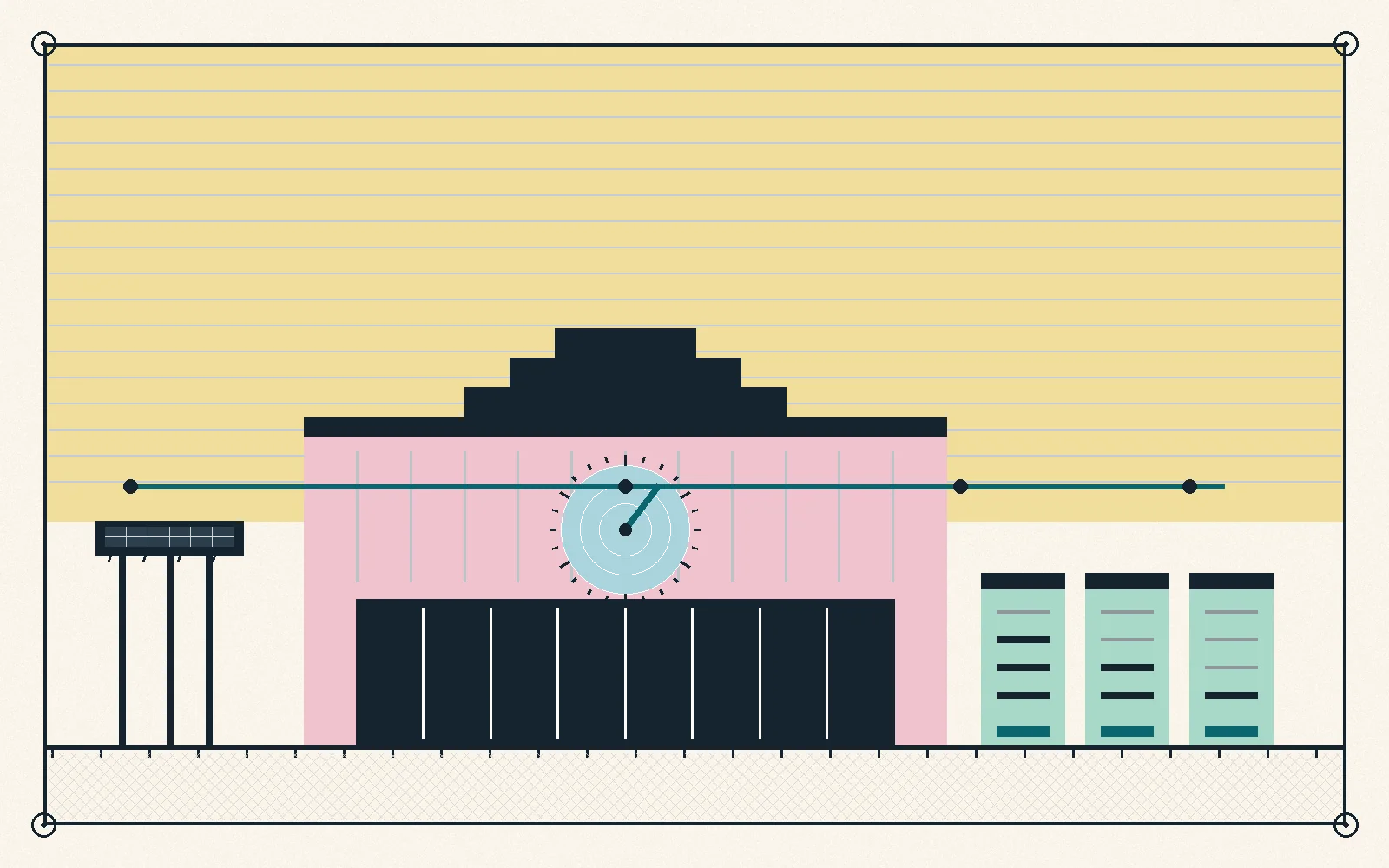
Illustration of a Florida marsh with crosshatched sawgrass, rippled water, a mangrove line, a coral half-sun, and one wading bird with teal legs

Siting / Filed Sep 24

The wetland question lands on every map.

Utility-scale solar keeps meeting the same obstacle: water. Permits now turn on what a project does to wetlands, drainage, and the sheet flow that the Everglades depends on. The best projects keep the marsh intact and route the array around it.

How we cover these stories
Illustration of a deco-fronted microgrid shelter with a gauge emblem, battery cabinets with charge ticks, and a solar canopy joined by a feeder line

Shelters / Filed Sep 24

Schools that stay lit when the feeder goes down.

A growing number of Florida public schools double as storm shelters, and the state has funded solar and storage at a share of them. The microgrid shelter is becoming standard kit: panels on the canopy, batteries on the wall, a gauge by the door.

On the watch list

No. 04 State of the grid


A concentric pastel barometer gauge face with a 48-tick bezel, a teal needle, a butter fan arc, and sunburst ticks
Figure 04, a barometer gauge faceIllustrative

Where things stand.

  • G-01Solar build. Florida sits among the top three states for installed solar capacity in national tallies, with most of the build utility-scale and sited inland, away from the coastal surge zones.
  • G-02Storage. The Manatee battery remains the state’s anchor at 409 megawatts, but every new storm season adds pressure to spread storage beyond a single flagship site.
  • G-03Demand. Cooling-driven summer peaks and hurricane-season outages keep storage, microgrids, and hardening near the top of the commission’s agenda.

No. 05 How we work


Three-panel illustration repeating one deco skyline with rooftop solar panels in plaster, butter, and deep teal tones
Figure 05, a Florida skyline with rooftop solarIllustrative

How we work.

Every illustration on this page was made for this site. We do not use stock photography or borrowed art.

Where a number appears in our copy, it comes from a public record we can point to, and uncertain figures are flagged in plain sight.

No invented numbersIf we cannot source a figure from the public record, we do not print it.
IllustrativeDiagrams show how systems connect, not measured output.
OriginalAll of the artwork is our own and lives on this site; nothing is borrowed from elsewhere.

No. 06 Outlook


What we are watching.

Four filings and rulemakings we will be following this season, in the order they are likely to matter.

  1. Storm protection plans. The commission’s review of utility hardening and undergrounding spending decides how fast the grid gets tougher, and who pays for it.
  2. The net metering successor. Florida’s 2024 settlement replaced retail-rate credits for new rooftop customers with lower export rates; watch how installations respond.
  3. Babcock’s next phases. Buildout continues, and other developers are studying the solar-plus-storage town template for inland sites.
  4. Storage siting. The next utility batteries have to land somewhere; wetland permits and neighborhood input will decide where, and how fast.

No. 06 Latest entry

Hardened schools, hurricane shelters, and the solar that tags along. Florida's shelter retrofit money pays to keep a school standing in a storm. Filed Oct. 10, 2026.